
How shame transforms desire and how I learned to make my body a home | Nona Inescu on geological time and fragile bodies & more
An issue on the fragility of the body and how poetry, art, knowledge and music can bring us closer to understanding it.
A week ago, I published my first-ever long-form essay. It’s about a traumatic experience I went through over the last 10 years and how shame and pain transformed my body and my relationship with it and with others. It is also the story at the heart of this issue, and I hope you will treat it with kindness. Below, you will find a shorter version of it and a link that will take you to the full article. And if you find it useful, I also recommend three books to look for if you’re struggling with intimacy issues, though not only then — everyone should read at least one of them.
Next stop is the art world, where artist and performer Alex Miruțiu sits down with Nona Inescu for an introspective conversation about fragile bodies and what we share with stones and plants. Nona currently has a must-see exhibition on display at Art Encounters Timișoara, where she explores all these themes and many others related to them, so think of this interview as a sneak peek into her world and artistic practice.
By now, Corina Sîrghi may no longer need an introduction. She moves effortlessly between two music genres that are very different, yet both genuinely represent who she is: jazz and taraf. A true mademoiselle of live concerts, she is now recording her first jazz album, so I paid her a visit to talk more about it and what her fans should expect.
We close this issue with an invitation into the world of Covor Plante Poezie, where Ana Maria Pop creates performances that blend spoken contemporary poetry, movement, and live music. Elena Vlădăreanu writes about her first encounter with Covor Plante Poezie and its defining qualities.
This issue will make you ask yourself questions and look inward. And I hope somewhere along the way, these stories will help you understand yourself and the world a little better.
Laura x

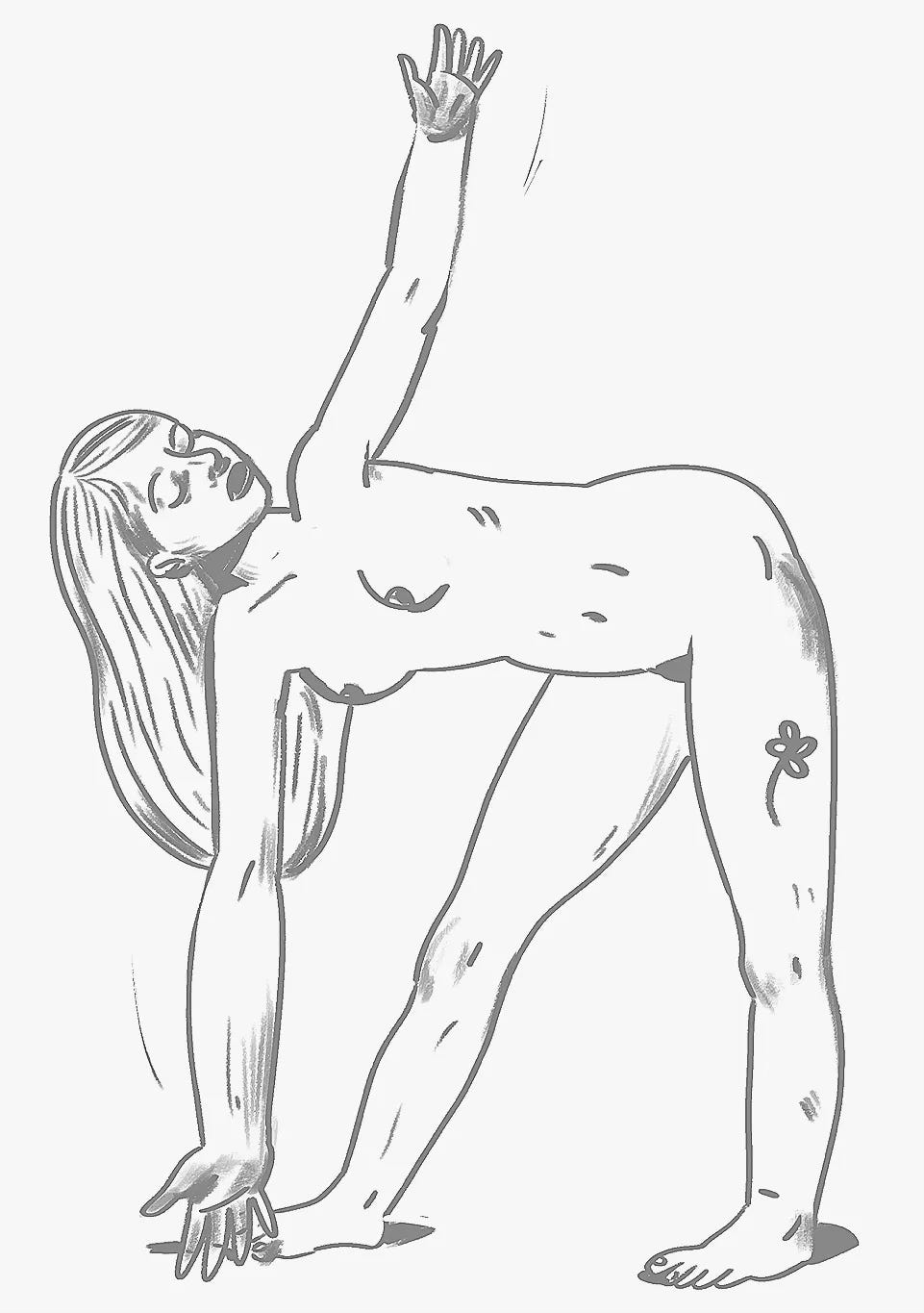
How shame transforms desire and how I learned to make my body a home
Last winter marked 10 years since the most traumatic event of my life for which I needed all these years to understand it and overcome it. I have spent a full decade fighting, confused, searching for ways to stay afloat, even though for a long time I couldn’t see the light at the end of the tunnel.
I was 21 and in a long-distance relationship for three years. I had been studying in the UK and would come home on weekends. I don’t remember much from the day everything began to change, but I do remember the fear I felt in my entire body that pushed me to buy three pregnancy tests. All of them came back positive. I was pregnant and oscillating between joy, fueled by my partner, who wanted the child and a deep sense of fear: of the unknown, of danger, of what my parents would say.
I had returned back home six months earlier with big dreams. I wanted to become the most ethical and empathetic film producer in Romania. My partner was studying medicine pushed by his father toward a profession he wasn’t sure he wanted, but one he felt obligated to graduate. For years, he had been told he was incapable of anything, which slowly wore him down until he began to believe it. For a long time, his way of coping with anxiety was cannabis – a presence invisible to others, but constant in our lives, one I had learned to accept by becoming a smoker myself. When I found out I was pregnant, we both worried whether the level of THC in our bodies might affect the fetus.
It was 2015’s Romania. Our parents’ generation had never really been exposed to soft drugs, so they didn’t understand their implications. We had no one to talk to about it, and I always felt like it wasn’t my secret to share. The lack of a doctor we could trust and speak openly with left us confused and scared. We wanted the child, but we didn’t know if it was the right time.
The first person I spoke to was my mother. We were never best friends and yet I have always told her everything – she was also the only one who knew about the use of marijuana. She didn’t yell nor blame us, but she didn’t consider keeping the baby either. So I decided to talk to my father too, although I had no intention of sharing our main concern with him.
My father had always been the pillar in my life, the person I resembled most and felt closest to. Even though my mother was more present, I was happiest when he made time for me. As I grew up, he became the one who showed up when I messed up badly, or when I lost my way. He never hit me, but his words could sting more than a slap. Even today, he’s the one I turn to when I need advice or feel at a crossroads. He is my lighthouse.
Like my mother, he approached the situation calmly. He sensed the worry in my voice and made a quick, simple judgment: I was too young to have this child, and I would have countless opportunities later. Now was the time to focus on my career; a child would slow down my professional development. After a few moments of silence, taking a long drag from his cigarette, he told me he could take this sin upon himself. Everything would be fine.
But what followed after that day, for years, was anything but fine.
I don’t know if it all started with my own uncertainty which let to a decision someone else made for us. We didn’t feel ready to decide for ourselves, but we didn’t have much time either, so the fact that my father had assumed the role of the judge felt like a relief. At least then. Looking back I think I would have kept the child if I had had more courage and more trust in my intuition and my own strength. I would have lived a different life, and my story would have sounded very different. But the story I chose to share, more than ten years after the moment that changed the course of my life is marked by shame, guilt and a lot of pain.
I was scheduled for the abortion on December 16, 2015. At the time, I didn’t have a gynecologist I trusted. I had tried a few, but all the doctors lacked empathy. So I agreed to go to my mother’s gynecologist which was actually the one who had delivered me. Christmas was only a few days away, and I felt like I was living a nightmare, even though for many women around me it was a simple procedure. It was hard for me to express my fear; it was easier to internalize it, to minimize it, even in front of my partner who seemed just as lost and unable to put his feelings into words.
When I entered the procedure room, I had my hair tied back and I was wearing a blue robe. I was put under anesthesia, and a few minutes later, the lights went out. I woke up in a room full of beds occupied by women who were half-conscious and weak. I remember wondering what I was doing there. I felt stripped of any kind of freedom. Alone and empty.
I don’t remember how I got home, nor how the next four years fully unfolded. What I do remember is the first overwhelming feeling I had shortly after the abortion. It was guilt. That I had killed a child, committed a great sin, and no longer deserved to be loved. At the time, I was somewhat religiously indoctrinated. Even though I hadn’t read the Bible and didn’t intend to, I knew what the major sins were and abortion was one of them.
To fill the immense void we both felt, we got a puppy. A Rhodesian Ridgeback named Oscar, for whom we drove all the way to Satu Mare and back in a single day. He quickly became my partner’s best friend and the burst of color in our home. He was chaotic, but obedient; stubborn, but affectionate. For ten months, he soothed the pain we had both managed to hide in the darkest corners of our being. We didn’t talk about it, but it haunted us. I lived with the fear that God would punish me for what I had done. A fear that was eating me alive. And it didn’t take long before I got punished. Oscar was hit by a car on DN1 the day we were returning from a vacation in Italy. It felt like our child died a second time.
That moment changed the way I related to children and to divinity. Faith, as I had understood it until then, was hurting me, so I decided to abandon it. I also started avoiding children, it became clear they made me uncomfortable. Eventually, I gave up entirely on the idea of ever having children until recently.
Our relationship changed visibly after Oscar’s death as well. Slowly but surely, intimacy disappeared and made room for doubt. Doubts that turned into a kind of anthem, one I internalized so deeply that I began to experience unbearable pain during intercourse. I was afraid of sex, and the thought that we had to do it at least once every few months to keep the relationship afloat stressed me out. I blamed myself for not being able to satisfy my partner. I wanted to evaporate. To hide somewhere where no one needed anything from me, where there were no shouldas. The only moments of peace I had were the days I was on my period, when it wasn’t my fault that we couldn’t do it. About a year and a few months after the abortion, we had both slipped into depression. My partner spent his days in front of the computer, playing games, while I spent a lot of time in my own mind, feeling more and more broken. Even though I didn’t feel the need for sex, I needed to be touched, or to be held. To feel seen and admired. To be told I was beautiful, that there was nothing wrong with me. We no longer saw each other, and neither of us understood the situation we were in. We were drifting.
To keep reading go to Writings on the Wall, my personal substack where you will find the full article in Romanian.

3 books to read if you’re fighting with intimacy problems
As a continuation of the story you just read, here are some of the books that helped me through my darkest days and that anyone should read if they want to better navigate their intimate relationships. None of these books are rare finds, so you’ll easily find them in any bookshop, online or offline.
Come As You Are, written by Emily Nagoski
Every woman should read this book. It opens up a whole new world of understanding how our bodies work, why we might not feel aroused by some of the things men often love, and how to look at ourselves differently. It’s the book that helped me understand that I am normal. And beautiful. Just the way I was born. No woman should feel ashamed of the things she likes or the things that bring her pleasure. It will transform your sex life and the relationship you have with your body.
Want, by Gillian Anderson
Let’s be honest. As women, we don’t talk about fantasies and our sex lives the way Samantha does in Sex and the City. Many times, it’s because of shame or restraint, but sometimes we should, because it might make us feel less alone. Or we might discover new things to try, new worlds to explore. This book is a collection of confessions from women around the world talking about their sexuality. If you want to find out how other women think about sex, then this book is for you.
Mating in Captivity, written by Esther Perel
Esther Perel is one of the most popular psychotherapists in the world, and her advice on relationships has changed many people’s lives. I left this book for last because it might be the best-known title on this short list. But it’s my bible. I always keep it somewhere close so that whenever I need advice, I don’t forget it exists. It taught me almost everything I know about couple dynamics and how to revive passion in a long-term relationship. I’m definitely having better sex after reading it, I can tell you that.

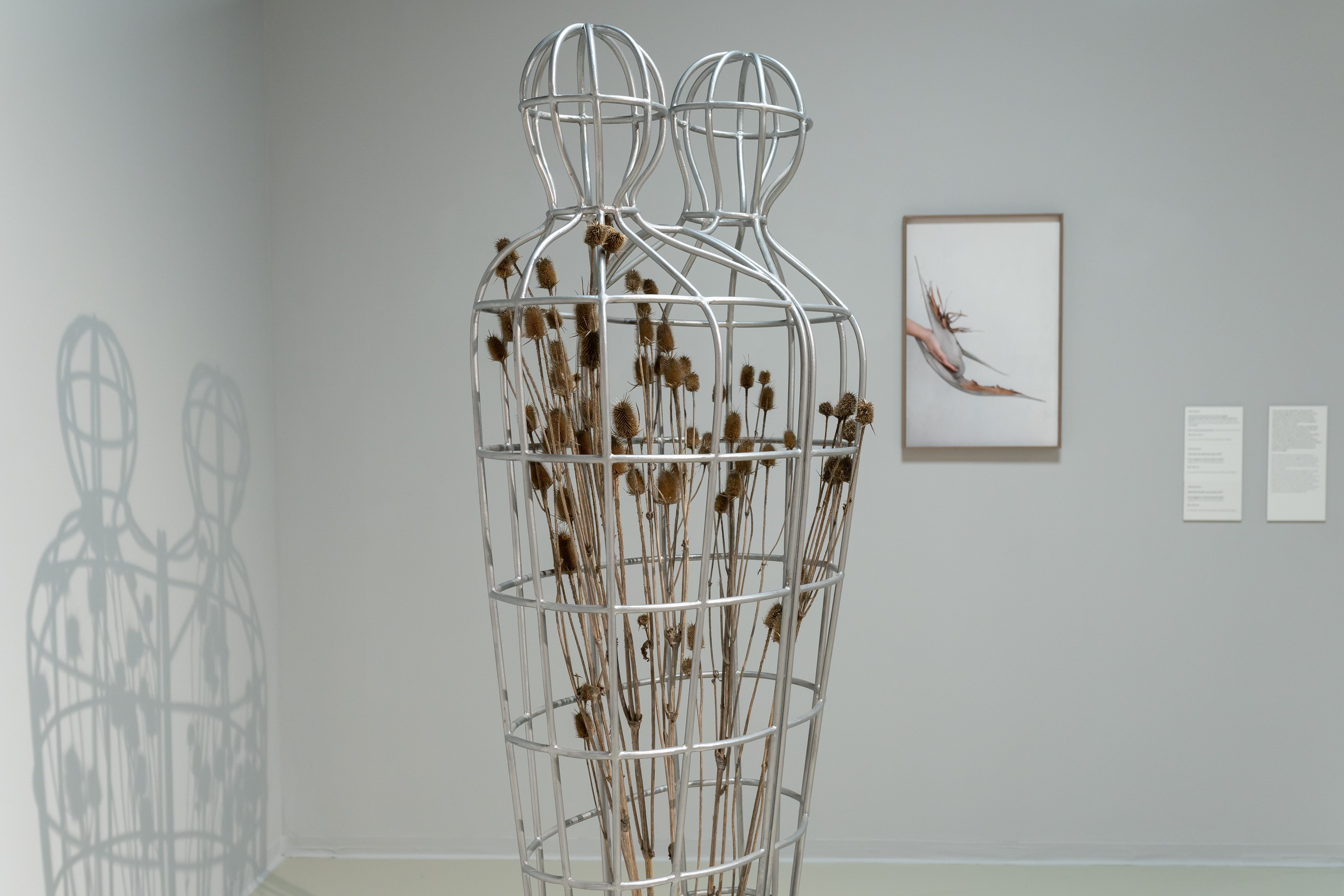
Nona Inescu on geological time and fragile bodies
Starting from the conceptual threads of the current exhibition Afterlife – Still Life, what emerges in the practice of artist Nona Inescu is not merely a repertoire of recurring themes, but a genuine way of thinking with the bodies, materials, and temporalities that make up our world: a mode of thought situated at the intersection of the posthuman, ecology, and a subtle, almost molecular form of speculation.
In this sense, the artist appears as a careful observer of fragile metabolisms, of slow and often imperceptible processes that always signal deeper mutations — phenomena, transfers, and forms of activity that transform us, most often, even before we become aware of them. Out of a desire to learn more about what inspires her and the thoughts behind her most recent exhibition in Timișoara, we invited Nona for a short interview.
In several of your photographic works, your own body appears either integrated into the landscape or absorbed by sculptural structures. Does the body for you function as an autobiographical subject, as a sculptural material, or as an organism undergoing a process of ecological, post-human adaptation?
I used my body especially in this series because there are also sculptures, not just photographs, which were created specifically for me and for my body, during a period in my life when I felt the need to preserve things. Obviously, in a symbolic way. It follows another series I made, entitled Reliquaries, where I used similar methods to preserve stones or other organic elements. This series of sculptures, titled Shells, is basically the final episode in this attempt at preservation. I started with stones, continued with plants, and intended to end with the human being, in this case, myself. For me, it is also a way of inserting myself into my own works. It is important for me to be there. It’s my personal imprint, my signature through which I bring the works closer to myself.
Since you’re speaking about preservation, about maintaining something in a certain form, I imagine you are also interested in temporality, right? On a certain level, humanity is insignificant in terms of existence and duration, yet it produces sometimes devastating effects, like nuclear disasters. Would you say you are preoccupied with themes such as disappearance, existence, or death?
Yes, I think these ideas have been present in my artistic practice from the very beginning, since I created the photographic series Concretions (Geophilia), where once again I inserted myself into a kind of sculptural park of trovants, which are large stones. I think that was the first time I reflected on geological time. And I came to the conclusion that these stones will remain on the planet long after humanity disappears. This extinction is no longer speculative. It probably won’t happen during our lifetime, but it will happen eventually, in the not-so-distant future. At the same time, working with these stones, which are said to be “growing stones,” made me think again about geological time as a temporality in which another kind of body, in this case an inorganic one, develops according to a different rhythm than ours. And somehow all these multiple temporalities coexist now. In the same way, the lifespan of a plant is much shorter than ours, and so on. There are different levels of fragility. I try to create these connections or somehow shine a spotlight on the things we have in common with these organisms.
I noticed that your works do not have a moralizing tone. They feel more like a manifestation of reality, which I really appreciate. I was especially fascinated by the mutant daisies which, according to the exhibition text, are a kind of repercussion of nuclear disasters.
I try to avoid having a didactic or moralizing tone in my works and instead leave things open, because the world is a bit more complex than it seems. The work you mentioned is 3D modeled after real images of daisy species found in places like Fukushima or Chernobyl, or in other radioactive areas. On the other hand, these kinds of genetic mutations in plants do not occur only in places affected by disasters. They can also appear naturally for genetic reasons. What interested me the most was the Daisyworld theory formulated by James Lovelock, which speaks about Gaia, a planet. Obviously, he refers to Earth, but he does not directly speak about Earth; instead, he uses another speculative model to illustrate certain theories. He imagines a planet populated equally by black and white daisies and demonstrates how the planet self-regulates its temperature through light, reflection, and refraction. What he is essentially trying to say is that humans do not actually have that much influence over what happens to the planet. These daisies growing in areas affected by disasters and radiation still emerge to the surface, even if they take on another form. It sends a semi-optimistic message.
Do you think plants or other forms of life can be creative? Of course, in quotation marks, in the sense of adaptability. For example, ivy can cover a building in different ways in order to survive, so it adapts in a creative manner.
I don’t know if I would go that far, but there is certainly a survival instinct. Ivy will turn toward wherever the light is better, or another species of plant will adapt itself in order to escape something. There are many processes that are common to human processes, but in plants they usually exist at a primordial level. I enjoy collecting this kind of information, it inspires me. So yes, humans are not the only ones capable of creativity, but I do think we need more creativity in general if we want to survive.
Afterlife-Still Life is on display at Art Encounters Timișoara until the 6th of June.
Alex Mirutziu is an artist, performer and film director. Through strategies of reuse, displacement, and bodily transformation, he examines the fragility of lived experience and the ability of imagination to reshape reality.
Corina Sîrghi is giving old songs a second life
Corina Sîrghi is one of the most soothing voices in Romanian music. Every time she sings, it feels as though she is caressing every word and note that comes out of her lungs. I bet this isn’t the first time you’ve heard of her, but if it is, she is one of the best-known voices in Romanian jazz and one of the leading female singers of taraf music (or Romani folk music). That’s one of the things that makes her so unique: she moves effortlessly between two genres that are so different, yet both genuinely represent who she is.
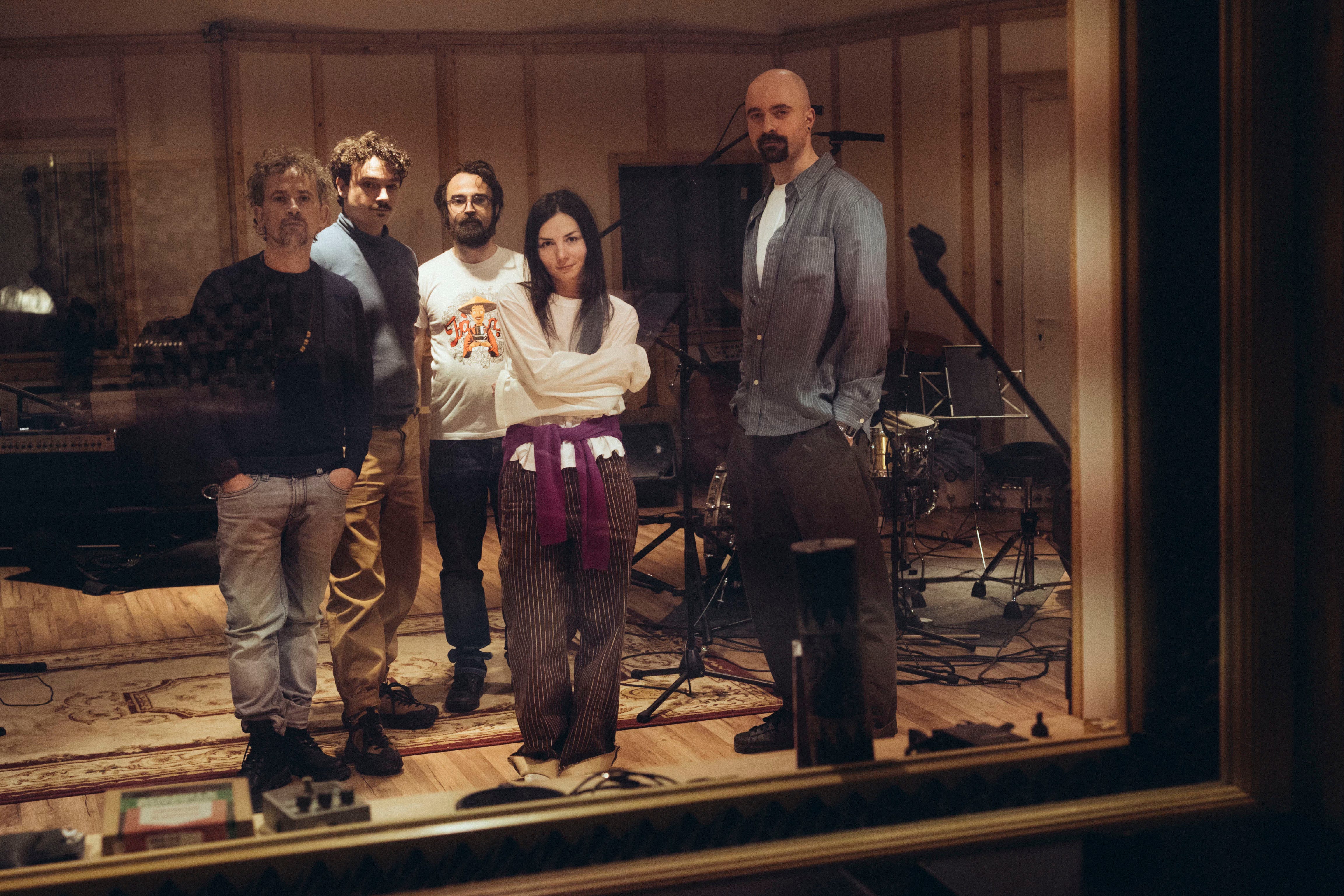
Her passion for music defines her. She has always known she would become a singer and has never allowed the precarity of the profession to stand in her way. This year, she is releasing her second album, her first jazz EP: a collection of old Romanian songs reinterpreted alongside her band — Toma Dumitriu on piano, Gabi Matei on drums, Paolo Profeti on saxophone, and Michael Acker on double bass. We talked about childhood, her love for old music, chances, and her biggest dreams.
Do you remember the first time you discovered music, or the first time you held a microphone in your hand?
I don’t have a single memory. No one ever told me I was talented, I was self-taught. But the very first time I sang, I can still picture it, was in the garden of my parents’ house in Văcăreni, when I sang, I think, Ionel, Ionelule. My biology teacher heard me from the other side of the fence and told my father, “Wow, Corina really sings, she’s tearing it up in the yard.” Otherwise, I mostly remember myself humming throughout my entire childhood. Music was always beside me and I was always beside it. I never had any doubts about what I would do in life, I always knew it would be this.
You’ve always remained faithful to singing in Romanian. Where does your love for the Romanian language come from?
It feels natural to me and has nothing to do with nationalism. It’s the language I fully understand, every shade of meaning, every nuance, and so I also fully understand what I sing, beyond what is visible on the surface. I have always believed in not singing something I don’t fully master. But I’ve also sung in Turkish, in Arabic, in many different languages. Singing in your own language, staying true to that path and respecting it, because that’s what I do, feels completely normal to me. It’s the way I communicate best and the way I know people understand me best.
You’re about to release your second EP and it’s very different from the first one. This is a jazz record. Where I felt the two albums meet, and what I feel defines you, is the original composition. In both cases, you took old songs, kept their melodic line, but together with a band created complex arrangements that feel completely different from the originals.
That’s exactly what happened with this album, too, coming out this autumn. I’m not doing anything extraordinary, I simply sing the melodic line and offer the boys a generous playground where they can build these jazz compositions. The thing is, a certain kind of relationship has formed between us. For example, I know Toma (Dimitriu, the pianist) really loves the way I sing and that matters enormously to me. And I, in turn, love him as a pianist. The same goes for Gabi (Matei), the drummer. I know he truly loves these songs. When there’s a sincere relationship of love between colleagues and when everyone loves their own instrument, there’s no way the result can be bad. It’s like cooking, you know? If one ingredient is missing, it just doesn’t come out right. I see everything we do exactly like a kitchen. We always joke during rehearsals, saying, “This is our kitchen.” I can’t express how much I love them and how much I’ve come to love jazz because of them, and how I can no longer live without live music. I think that’s my greatest luck, being surrounded every day by live music, endless concerts. That’s areal privilege.
Where do you find the songs you perform and how do you choose them?
They’re songs chosen from what I personally found meaningful and beautiful, songs I fell in love with over time and decided to carry forward, to give them another life. Because that is, in fact, the main purpose of this album. I discovered the song Nu-i păcat de noi, sung by Elena Constantinescu, completely by accident. I don’t even know who the composer is because the information has been lost and, from what I understand, almost nothing is known anymore. These were songs made for the radio and they were never recorded on vinyl. I found it incredibly beautiful. First of all, because it made me feel very good. I loved the lyrics immensely and I went to Toma and suggested we work on it. We didn’t initially like the original version, so we changed it. We had the idea givint it a bossa nova rhythm because we felt it needed a softer, swaying one. So we made it bossa nova, then Gabi came in with the drums, Paolo with the saxophone, Michael with the double bass, and that’s how the new version was born. This song is my latest discovery. Lately I haven’t had much time to search anymore, but usually I found them either on YouTube or on records.
Do you have a favorite song on the album?
Nu-i păcat de noi. I don’t know if it’s because it’s new. But if I had to choose a second one, I think it would be Garofița. It’s the only song originally sung by a man out of all the songs I have ever performed with the boys at concerts.
This year marks ten years since you started singing and throughout all this time you’ve always performed someone else’s songs. I was wondering why you haven’t released your own music yet. Is it because you feel you have nothing to say, or is it more of a financial decision?
I always felt that all these difficulties, from the financial aspect to how hard it is to build a team and put everything together as an independent artist, because that’s another very important point, were simply meant to happen this way. That’s how I’ve functioned my entire life. I’ve always believed everything comes at the right time and that if something hasn’t happened to me yet, then it simply wasn’t supposed to happen because I wasn’t ready. I don’t know, it feels to me like everything arrives exactly when it should. Simply like that.
It’s something I know I’m going to do and that it will eventually happen. And I also feel I’m getting closer and closer to that moment. I have unfinished compositions. Last year I wrote two songs and performed them at a concert with Amphitrio. I think it was the most beautiful thing in the world, hearing my own imagination running free. I realized that’s what I truly want. The only inconvenience until now was my lack of confidence, which stopped me from doing many things. It always sabotaged me. But I learned a lot from it and in the end it also had its purpose. I became a little more balanced.
Would you say this is your biggest dream?
I want to sing a lot and leave a lot behind me. I don’t know if that necessarily means many albums. And I want to sing with an orchestra, maybe that’s the big dream.

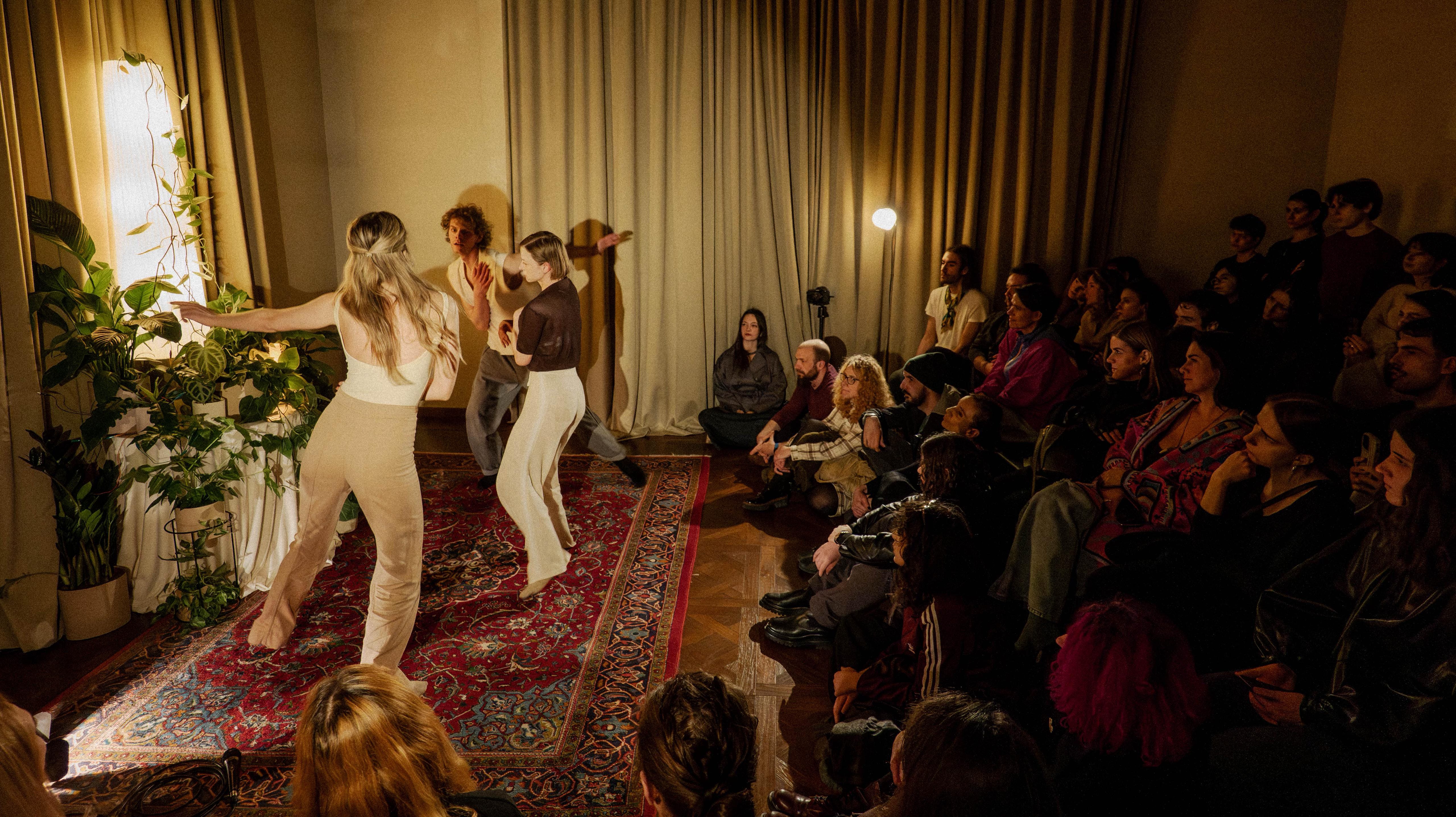
Covor plante poezie. Where poetry learns to move
Ana Maria Pop, inițiatoarea proiectului Covor Plante Poezie, avea un mic magazin de plante tropicale în hala Obor când și-a dat seama că i-ar plăcea să facă ceva și pentru ea, ceva care să aibă legătură cu actoria, domeniul pentru care a absolvit o facultate. A pus între plante,un covor și, cum era pasionată de poezie, lucrurile s-au legat de la sine: cum ar fi un performance de poezie pentru care acest covor persan să servească drept scenă, iar plantele drept decor? Căuta un titlul potrivit, iar un prieten i-a sugerat să folosească fix ceea ce avea: covor, plante, poezie. Se întâmpla în urmă cu trei ani, iar de la lansare, conceptul și-a câștigat rapid popularitatea. Celor trei elemente fixe li se adaugă mișcarea și muzica, iar spectacolele sunt nomade și one time only. Adică de fiecare dată, un alt spațiu, alți performeri, alte poezii și altă temă.
”Pentru mine, covorul este un spațiu de întâlnire aproape domestic, dar în același timp simbolic. Plantele aduc ideea de creștere, de ritm organic, de timp viu. Iar poezia e un limbaj care se așază foarte natural între ele. Împreună creează un cadru în care cuvintele nu sunt doar auzite, ci trăite, unde există o apropiere reală între performer și public. E o formă de a aduce poezia într-un spațiu mai cald, mai accesibil, dar fără să-i pierzi profunzimea”, îmi spune Ana Maria.
Prima mea intersectare cu acest proiect a fost performance-ul din aprilie - Her Private Notes, de la Ototo Station. Am ajuns târziu, deci era deja plin. Una dintre calitățile proiectului Covor Plante Poezie este că, mergând de fiecare dată în alt loc, creează o mică insulă în cartierul respectiv ceea ce m-a făcut să mă întreb dacă în public se regăsesc mai ales oameni din zonă, riverani. Ana Maria Pop îmi confirmă, dar adaugă că sunt și spectatori care urmează proiectul, nu doar pe rețelele sociale, ci și prin oraș, pe unde acesta rătăcește. Mișcarea se mixează de fiecare dată cu poezii rostite la microfon – de data asta o selecție din texte Flaviei Dima, ale Ioanei Adriana Teleanu și ale mele – și cu muzica Suce Fraga, o artistă underground care lucrează deopotrivă cu sunet și text. Când alege textele pentru performance, Ana Maria Pop caută mai ales poezie contemporană, poeme care se pot deschide către un dialog cu corpul și muzica. Uneori îi invită chiar pe performeri să vină cu propria propunere pentru texte, la fel cum e posibil ca în acest dialog transartistic să fie incluse gândurile și cuvintele artiștilor participanți. ”Dansul contemporan și poezia contemporană au în comun libertatea de formă și relația directă cu prezentul. Ambele lucrează mult cu sugestia, invită metafora şi activează stări emoționale de fiecare dată. Mișcarea vine ca o extensie a textului, nu îl ilustrează, ci îl completează, îl tensionează sau îl deschide. În proiect, corpul devine un alt tip de limbaj, iar împreună cu muzica live creează o experiență performativă complexă, în care publicul poate intra pe mai multe niveluri”, mai spune Ana Maria. Pentru următoarele performance-uri Covor Plante Poezie puteți accesa pagina oficiala de Instagram a proiectului.
Covor Plante Poezie was initiated by Ana Maria Pop, who used to run a small tropical plant shop in Obor Market when she realized she wanted to create something for herself as well, something connected to acting, the field in which she graduated. She placed a carpet among the plants and, since she was passionate about poetry, the idea came together naturally: what if there were a poetry performance in which the Persian carpet served as the stage and the plants as the set design? She was looking for a fitting title when a friend suggested using exactly what she already had: carpet, plants, poetry. That was three years ago, and since its launch, the concept has quickly gained popularity. Movement and music are added to these three fixed elements, while each performance takes place only once, in a different location each time, with different performers, poems, and themes.
“For me, the carpet is an almost domestic meeting space, but at the same time a symbolic one. The plants bring the idea of growth, of organic rhythm, of living time. And poetry is a language that settles very naturally between them. Together, they create a setting in which words are not only heard, but lived, where there is a real closeness between performers and audience. It’s a way of bringing poetry into a warmer, more accessible space, without losing its depth”, Ana Maria tells me.
My first encounter with the project was at the April performance called Her Private Notes, held at Ototo Station. I arrived late, so the venue was already packed. One of the qualities of Covor Plante Poezie is that, by moving to a different location each time, it creates a small island within each neighborhood, which made me wonder whether the audience mostly consists of locals from the area. Ana Maria Pop confirms it, but adds that there are also spectators who follow the project not only on social media, but also throughout the city, wherever it may wander.
Each performance brings together movement, spoken poetry, and live music, this time featuring texts by Flavia Dima, Ioana Adriana Teleanu, and myself, alongside the music of Suce Fraga, an underground artist working with both sound and text. When selecting poems for the performances, Ana mainly looks for contemporary poetry, poems that can open themselves up to a dialogue with the body and with music. Sometimes she even invites the performers themselves to propose texts, just as the thoughts and words of the participating artists can become part of this transdisciplinary dialogue.
“Contemporary dance and contemporary poetry share a freedom of form and a direct relationship with the present. Both work through suggestion, invite metaphor, and activate emotional states every time. Movement comes as an extension of the text; it does not illustrate it, but complements it, creates tension within it, or opens it up. In the project, the body becomes another type of language and, together with live music, creates a complex performative experience that the audience can enter on multiple levels,” Ana Maria adds.
For upcoming performances by Covor Plante Poezie, you can visit the project’s official Instagram page.
Elena Vlădăreanu is a writer and a journalist. She talks about movies and theatre at the Radio România Cultural since 2017. She made a debut as a poet in 2001 and has published many collections of poems since.
EDITOR’S PICKS
Every month, I share with you the things that caught my eye during my trips around the city or around the world. April marked the start of spring, artsy events, and outdoorsy activities. So here are some of the things I enjoyed.
A brand I discovered and added to my list is Sakra Jewellery. Bold yet mysterious rings that will turn heads and made me a fan from the very first time I saw one. Go take a look and let yourself be mesmerized.
Something I did for myself and truly enjoyed was a yoga class on a Sunday morning with Aura Dulgheru. Her weekend classes are a blend of introspection and physical movement that usually begin with a 10-minute breathing session. Every Sunday, a group of people meet in the park and forget about all the drama. The best part is that you can bring your kid or your dog with you. The very best part is that Aura always has cookies.
An exhibition I visited and immediately wanted to return to was Lia & Dan Perjovschi’s DRAFT. Their first ever exhibition together in Romania is a retrospective of their brilliant work, intertwining beautifully across 40 years of artistic practice. It opened at the beginning of April at Hanul Gabroveni by ARCUB and it’s a must-see.
An event I attended that instantly made me feel better was Jazz in Church. If you’ve never heard of it, this small four-day jazz festival takes place every April in the Lutheran Church in downtown Bucharest. Every year, they bring some of the best musicians in the world. I haven’t missed an edition since the pandemic and I always leave surprised by someone. This time, it was pianist Shai Maestro, who made it seem as though he were playing two or three different instruments when, in fact, it was just him and a piano on stage. Marvellous and deeply refreshing!
See you next month, thank you for reading! <3