
As July approached, we all hoped Romania would get back on track and exit its political crisis, which might send our country into the junk category of credit ratings (aka not good for investments). But guess what? We’re still here, and it’s not looking like it’s ending anytime soon.
The president has failed his voters, the party leaders are producing chaos, and the nationalists are profiting and winning without moving a finger. We’re living in an age of division, one in which our egos and stubbornness don’t help us build bridges, but rather destroy them. Disinformation is on every social media channel and, therefore, on all of our screens, and it only widens the chasm between us. Wars have become constant and inevitable, whether we talk about cultural ones, proxy wars, civil wars, or cyberwarfare. It’s easy to close the news and just go on with your life, especially now that it is summer, but is it the right thing to do?
That’s something I ask myself on a weekly basis.
This is a social-cultural newsletter, where we usually talk about what happens in the fields of the cultural and creative industries, but as with the spring of last year, we’re living in some scary times, so we cannot just close our eyes and entertain ourselves. With this in mind, I invited writer Radu Vancu to write about division, nationalism, and cultural isolation. He does it in a very unique way, claiming back Eminescu from the claws of the nationalists and explaining how he connected Romania to the world. After this thought-provoking read, Sânziana Negru invites us to slow down and shares with us some ways in which we can be more present this summer.
I talk to Matei Câlția about his father’s largest exhibition, Extravaganza, on display in Sibiu, but also about his childhood memories and the founding of Galeria Posibilă. We close off this comprehensive edition with a short piece by Oana Barbonie on Timp Pierdut, a small Bucharest-based brand that reimagines the life of forgotten materials and turns them into beautiful shirts. My picks for this edition are all around Copenhagen, my favourite European city and a great place to spend your summer holiday.
Enjoy your reading and don’t forget to heart it, comment, or restack it if you do!
Laura x

Bridges, not Borders. Lines About Our Cultural War
I.
Eminescu must not be allowed to be confiscated by the extremist-nationalist rhetoric. And, in general, nationalist extremism must not be allowed to confiscate symbols—not just cultural ones, I mean. Because if it comes to control the symbolic narrative (y compris the cultural one), extremism has won.
Yes, Eminescu was a nationalist, like the majority of the romantics—and yes, as Isaiah Berlin shows, romantic nationalism would ultimately give rise to the criminal nationalism of the 20th century. However, 19th-century nationalism & 20th-century nationalism are profoundly different. That of the romantics (& of Eminescu) was an anti-imperialist one: it sought to give a voice & identity & political existence to nations aggregated by force within various empires. That of the 20th century, on the contrary, is an imperialist one: both Italian fascism and German nazism weaponized nationalism in such a way as to build empires that would eliminate inconvenient races & peoples.
Just so, Eminescu’s nationalism is profoundly different from the 21st-century nationalism of Călin Georgescu’s sect: Eminescu’s nationalism could coexist with an openness to the world & with a great curiosity for everything foreign (to such an extent that Eminescu seems more like a great German poet of Romanian language, as Foarță observed somewhere; in any case, Eminescu would not have become Eminescu without German literature & Sanskrit texts). The nationalism of the CG rite is one of closure, of the refusal of the foreigner, even of hatred towards any form of alterity.
Eminescu would not have become the brilliant poet we know if his sources had remained only Romanian ones. It is one of his paradoxes: he is a nationalist who connected us to the world. He had this extraordinary openness to what is foreign, while simultaneously writing one of the most horrible xenophobic poems (”He who loves the foreigners, / May the dogs eat his heart” etc). In any case, I am convinced that globalists love Eminescu with categorically more insight than nationalists do. The globalists Maiorescu, Lovinescu, Negoițescu, Creția, Cărtărescu have written deeper & more essential things about him than any of the autochthonists. Precisely because they understood him as a poet who, despite his nationalism, decisively connected us with the world. It is with Eminescu that Romanian poetry begins to exist in the way Europe’s great poetry does.
II.
That is why the whole Vexler scandal is so false; the extremists made an enormous scandal because Vexler ended up by tearing a page with the figures of Eminescu, Iorga, Paulescu, Goga, Vulcănescu, and other antisemites that they kept waving in his face, preventing him from delivering his speech about a law that toughened penalties for Nazi and Legionnaire propaganda:
a. First of all because, if they wanted to make a list that represents them & from which to claim heritage, the nationalists of the CG rite should make one not with Eminescu, Iorga, and the others, but with writers who had exclusively Romanian sources: Vasile Copilu Cheatră, Maria Cunțan, and the other values of national pășunism [pastoralism/traditionalism]. These are their purely Romanian values. The list presented by them in Parliament is an internationalist one—and does not represent in any way the isolationist nationalism of the CG sect.
b. Secondly, the list is an abomination in itself because the only thing that unites those on it is antisemitism. In other words, Eminescu is not there for his extraordinary local version of European romanticism—but because he is an antisemite; Iorga is not there for his history books—but because he is an antisemite—and so on. The wretchedness of that list is precisely this: that it attempts to legitimize antisemitism through the work of those listed. Yet, antisemitism cannot be justified by anything. Antisemitism means “to unleash barbarism against liberty,” as Maiorescu wrote as early as 1868. Antisemitism is barbarism. And that antisemitic list is an exercise in barbarism.
c. Thirdly, the antisemitism of those on the list implies diverse ideological proposals – each with its own historical specificity. Eminescu was an antisemite who did not support the extermination of Jews—what he proposed was individual, as opposed to en masse, naturalization; involving the Jewish population into productive labor, specifically agriculture, and forbidding them commercial activities; cultural assimilation, respectively speaking Romanian within the family and encouraging mixed marriages. His antisemitism was rather assimilatory than eliminationist. Moreover, Eminescu did not translate his ideology into political actions. Goga, on the contrary: as prime minister, he initiated the antisemitic legislation that stripped cca 230,000 Jews—until then full-fledged Romanian citizens—of their rights, and thus made the Holocaust possible. Paulescu, in his turn, is one of the most horrific European antisemites: he wrote entire pamphlets on the scientific necessity of exterminating the Jews. Putting them abusively on the same list means attempting to transfer Eminescu’s cultural prestige onto Paulescu’s criminal proposals.
d. Lastly, when you see extremists making a parade of cultural nationalism, you cannot help but remember Dr. Johnson’s observation: patriotism is the last refuge of a scoundrel. It is a list made by extremist scoundrels in an attempt to culturally justify antisemitism. Nothing is more telling than that.
III.
When one sees such artificial scandals, one understands how much we need to return to Eminescu’s lesson: a nationalist poet was able to build, despite his own nationalism & despite his own xenophobia, bridges to the world. So efficiently that he truly integrated Romanian literature into world literature for the very first time. He achieved this because he truly loved literature more than his own nationalist ideology.
Similarly, today’s Romanian culture, finding itself in an era of nationalist & xenophobic resurgence, must ensure that it continues to build bridges to the world—despite its own nationalism. When it isolates itself from the Zeitgeist, even cultures more canonical than ours decline—as Hugh Kenner observes (in A Sinking Island) it happened to British culture when it isolated itself from continental avant-gardism. Such isolationism would be all the more destructive for us.
Romania built itself by shaping identity out of what was foreign.
We must use every poem as a footbridge. Every novel as a bridge. Every movie as an embrace. For the other. For the foreigner. For the difference that enriches us. For the alterity that makes us ourselves.
Radu Vancu is a writer. He is a professor at Lucian Blaga University in Sibiu and editor-in-chief of the magazine Transilvania. His most recent book is the novel Paradis (Polirom, 2025)

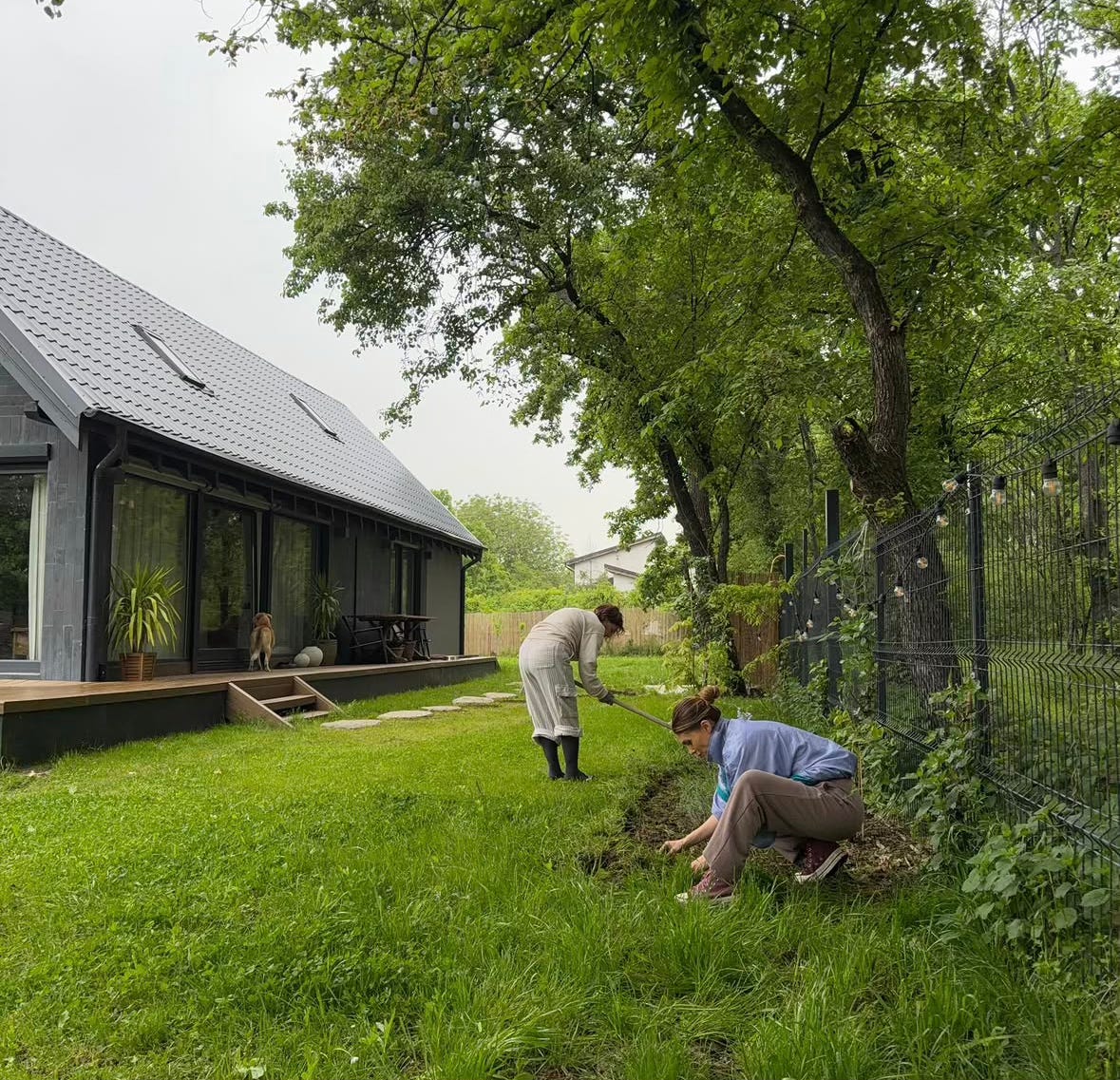
4 ways to slow down and be more present this summer
As a child, summer felt endless.
Now the older I get, the more I realize that time is finite, not in a sad way, but in a way that makes me want to be more intentional about where I put my energy. Paradoxically, the fuller life becomes, the stronger my desire is to slow down. And I’ve realized that there are a few simple things that always bring me back to the present moment, so here’s something for this summer to keep in mind:
1. Find a wild beach
The most beautiful beach you’ll visit this summer probably won’t be in a busy resort or at the trendiest beach club. It will be an unspoiled stretch of coastline you stumble upon during a walk, where your dog can run freel and where you forget about your phone altogether.
I’ve stopped looking for places that look good in photos and started looking for places that make me feel good. Sometimes, that’s all we really need.
2. Plant something even if you don’t have a garden
I never thought I’d say this, but planting has become one of my favorite things to do. Maybe because it forces you to stay present. You can’t rush a plant to grow, and you can’t make up in one day for all the days you forgot to care for it.
Whether it’s a linden tree, a few flowers on your balcony or a pot of fresh herbs in your kitchen, there’s something incredibly calming about watching something grow slowly, asking for nothing more than consistency.
3. Read Vara în care mama a avut ochii verzi by Tatiana Țîbuleac
I’m not the kind of person who saves reading for holidays, but this book somehow belongs to a quiet summer afternoon.
It’s not an easy read, nor one you can rush through. It’s about relationships, about the things we say too late, and about how love and pain can exist at the same time. Every now and then, it makes you close the book and simply sit with your own thoughts.
4. See BUG at Unteatru
Now that Unteatru has moved to its new home, this is the perfect time to discover one of its most compelling productions: BUG (d. Vlad Bălan)
It’s the kind of play that leaves you with one question long after: What is real, and what is only a product of our own minds? It explores fear, loneliness and the fragile line between reality and belief. Beyond its powerful story, it’s brilliantly performed by Corina Moise, Vlad Ionuț Popescu, Florina Gleznea and Alexandru Pavel.
Sânziana Negru is a content creator and storyteller with a keen interest is concsious living. You can find her on her social media channel, where she celebrates the small rituals and the beauty of living.

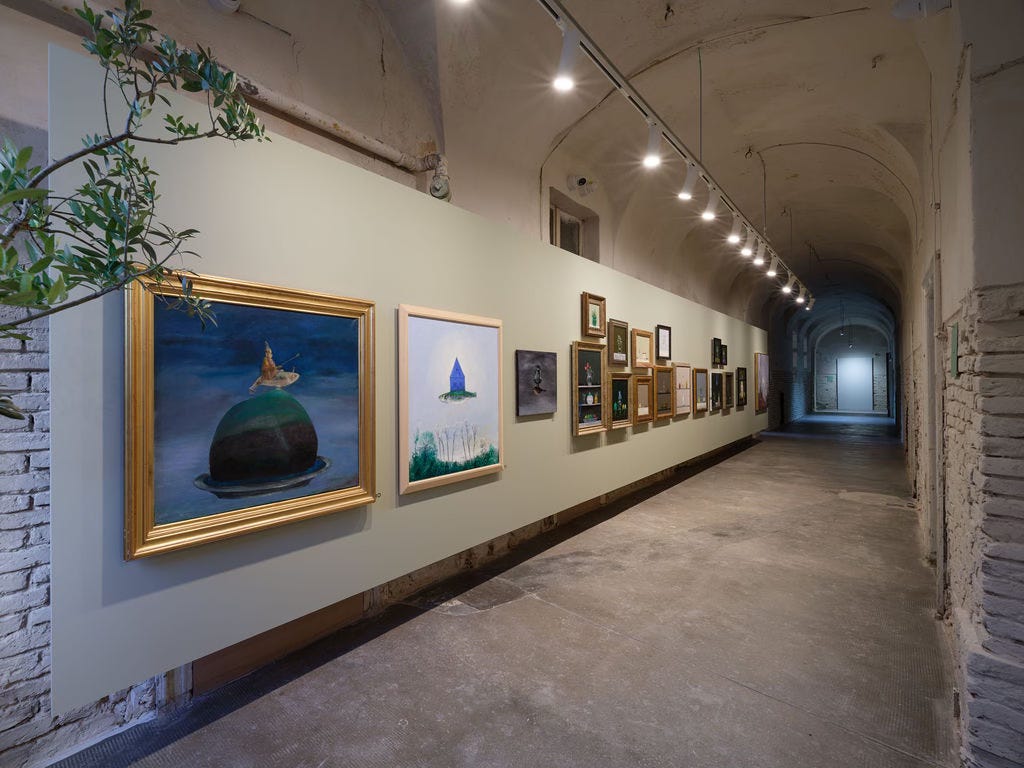
Matei Câlția: „Ștefan’s paintings reflect back to us desires we have not yet fulfilled and give us the courage to pursue them.”
Earlier this year it has been announced that the biggest and most comprehensive exhibition of Ștefan Câlția’s works will open in June, in Sibiu, during FITS. Probably the most important event of the year for the artistic landscape, Extravaganza is one no art aficionado should miss this summer. It’s been a few years since Constantin Chiriac, the director of FITS, invited the painter to exhibit his art in Sibiu, however, no place was fitted for such an occasion. Romania lacks large-scale spaces for contemporary art in most of its bigger and popular cities, so this whole initiative meant building a place from scratch, or restoring an old building so it could be used for generations to come. And that’s what has happened with Mânăstirea Ursulinelor, a church from the 5th century located in the center of Sibiu. The whole process took place a little over 5months and it can be viewed as the real extravaganza of the project.
To find out more, I sat down with Matei Câlția, the son of Ștefan Câlția and the manager of Galeria Posibilă. We talked for more than an hour, going back on memory lane to his childhood and the first memories he has of his father working.
I would invite you on a walk down memory lane. Do you remember how a day in your childhood home looked like?
Since 2001, my parents’ home, this apartment on Popa Petre Street where I am right now, has become Galeria Posibilă. Over time, it gradually lost its personal character, which is why I rarely remember the original layout of the house anymore. Between what is now my colleagues’ office and the exhibition space, I used to run around in my socks and skate across the wooden floor. The spot where my desk stands today used to be my parents’ bed and a bit further there was the TV where cartoons were playing.
I was a hard child to keep track of, with an undiagnosed ADHD, especially when it came to standing still for homework. I grew up in a world without mobile phones, spending hours leafing through a massive Rembrandt album. There wasn’t much else to distract you, so I would happily stare at what felt like the only colorful images in my life at the time. Later, in high school, I became the favorite of the art history teachers. It came naturally to me, unlike many of my classmates who struggled to memorize dozens of artists and styles.
Do you remember the first time you saw one of your father’s completed works? What feeling did it evoke?
No, or at least I don’t remember it. What I do remember is a lovely game he once played with me. I often spent time with him in his studio. I must have been six or seven years old. He had painted a hill with some trees on it, perhaps a house too, though I can’t remember exactly. He said to me, “Look, we have to leave now. But the work isn’t finished. These trees need to be cut down, and I can’t do it because we have to go home. So I’m going to draw an axe on the back of the painting, and by tomorrow, when you come back from school, you’ll see that the forester has come, taken the axe, and cut down the trees.”
The next day, when I returned from school, I was astonished to discover that the trees were gone. He knew he didn’t like them, that they weren’t working in the painting, and he came up with this game for me.
You graduated in Painting from UNARTE, yet you eventually moved toward graphic art and photography, and later toward curating and arts management, which you have now been doing for 23 years. Why?
I had a wonderful painting teacher in highschool, one of the most extraordinary and magical teachers I’ve ever known: Ion Dumitriu. He was a storyteller at heart and created an absolutely remarkable atmosphere for us, the children he taught at the time. I think the most important thing he gave us was the ability to approach our work with genuine pleasure.
Later, in high school, I chose graphic art partly influenced by my father’s experience. Throughout the 1980s and into the early 1990s, he worked at the engraving workshop on Speranței Street, the only one in Bucharest, run by the Artists’ Union. He had mastered the craft, especially lithography and metal engraving, and I was fascinated watching him work. Although I was generally a restless child, this is where I could be quiet and focused.
So I pursued printmaking and dreamed of continuing in that direction, but for university most of my classmates chose to study painting, so I followed them. I was privileged because my father was a professor there, so I could occasionally skip classes and experiment with things that, sadly, I later discovered are no longer possible today. For example, I spent one semester studying ceramics and another studying photo-video. It was perfectly legitimate at the time. Today, you can’t do that anymore.
For a while, I also worked as a theatre photographer with Mihai Măniuțiu, the Odeon Theatre, ACT Theatre, and Marcel Iureș. I enjoyed that work quite a lot. But ultimately, when I graduated, this house was empty and unoccupied. Together with some friends, we decided to turn it into a studio and perhaps show a few works. One thing led to another, and before long I was completely absorbed by the project. That’s how the gallery was born.
In the early 2000s, when you founded Galeria Posibilă, neoliberalism was not yet fully established in Romania and globalization was not as visible as it is today, even less so within the art market. How has the Romanian cultural and artistic landscape changed over the past twenty years?
Despite neoliberalism, I believe it has changed for the better. It has retained many of the anxieties and vulnerabilities that characterized the 1990s and early 2000s, but it now possesses much greater vitality.
On one hand, I continue to discover artists who dare to take risks. Access to resources is far greater than it used to be, and as a result, many of those risks actually succeed. On the other hand, the effects of EU, such as the economic growth have become tangible. Even though education itself has not received the investment it deserves, people are living better, travelling more, and have gained a certain form of education through their encounters with the wider European world.
For the past five or six years, there has been a genuine sense of momentum in the art world. Whether it manifests itself through exhibition openings or through collecting, art remains an intimate and deeply personal relationship that one can have with a work.
At the same time, it would be dangerous to say that this has automatically translated into greater support. Artists’ expectations of themselves have also grown enormously, as have their anxieties. In the 1990s, simply having an exhibition in your city was considered a success. Today, artists aspire to international careers, to travel with their work, to be present globally. That ambition inevitably creates pressure.
What is particularly important is that there is no single model of what an artist should be. Through conversations with Liviana Dan, the curator of the Extravaganza exhibition, I came to understand that just as there is no single model for a gallerist, there is no single model for an artist. Some artists may never have an exhibition and still be extraordinarily relevant and important. We do not yet fully recognize that model in Romania, but we should strive to respect and value every kind of artistic practice.
Do you think social media has also changed people’s access to art and their perception of it?
To a lesser extent, yes. Social media generates excitement, but it rarely turns into substance. In that sense, it often becomes an adversary. It agitates us, amplifies the ADHD that exists in all of us, and prevents us from connecting with our own thoughts and inner states when encountering an exhibition or an artist. It leaves us with movement, but not always with reflection.
Extravaganza is not only about Ștefan Câlția’s paintings, but also about his commitment, and yours, to restoring and protecting historic buildings in Transylvania. I find it remarkable how you transformed a space that had been abandoned for years into an exhibition venue. Could you tell me about the stages of that process and the challenges you encountered?
First of all, we live in a country that still doesn’t have a Kunsthalle. Last year finally opened in Oradea the first gallery space conceived and developed by a municipality specifically for arts. The lack of large-scale contemporary art spaces where exhibitions can truly be built is enormous.
For years, FITS (through Constantin Chiriac), invited us to create an exhibition in Sibiu, and every time we visited, we ran into the same obstacle. The state can do many things, but often it does not know how, and the only way to demonstrate what is possible is by actually doing it. So we decided to try. We are working with an artist who is both highly visible and highly collected. So, we had resources and we had a network. Why not try to set something in motion and see how far it could go?
From the outside, things may have looked simple, but there were many moments of anxiety. One of them was the first time we entered inside Mânăstirea Ursulinelor and discovered rain pouring through the building. Yet people gathered around the project very quickly. Companies came forward, institutions joined in, and together we managed to restore the structure. For me, that is the real extravagance.
In this project, I am not a manager. I am merely an observer. And that became my greatest challenge: resisting the urge to step in and take control, resisting the temptation to get involved simply because I believed I was competent. Instead, I tried to intervene as little as possible, only when it truly felt necessary.
The space and the paintings seem to walk hand in hand, each allowing the other to shine without overshadowing it. There is a balance between them that opens up important conversations about unconventional exhibition spaces, restoration, and the relationship between architecture and art. In a way, the exhibition also becomes an argument for sustainability within the cultural sector.
For us, sustainability was a major concern. We chose this space largely because there was already a local initiative in place, one with chances of developmeny. We asked ourselves a simple question: once our own extravaganza is over, what remains? Do we leave behind a pile of rubble and discarded drywall that needs to be cleared away and thrown out? Or do we leave behind a space that can continue to be used, developed, and cared for by a local organization?
Because we often ask ourselves the same question when producing exhibitions. Why do we need to build all these temporary walls only to throw them away afterwards? It is important to think critically about who we are, how we build projects, and what kind of impact they have when it comes to sustainability. Beyond the elegance and spectacle of an opening night, what traces do we leave behind?
As a direct result of this exhibition, we are now launching a series of educational workshops. The number of participants is small, around thirty people, but they come from communities with virtually no access to art. We are talking about children from foster care institutions, elderly people, and individuals who have experienced various forms of abuse. People who genuinely need access to art.
Ștefan Câlția’s work invites reverie. It has the power to transport viewers into magical, colorful worlds, though not always better ones, because dreams can also foretell difficult things. Drawing on local myths and life in Transylvania, his work has inspired thousands of people. In your view, what makes it so deeply appreciated? What are its defining qualities?
Many of us working on this project learned something from Ștefan’s paintings. You might look at one of his still lifes and think it is ordinary. What is contemporary about ti? And what is there to prove? But his paintings are actually mirrors. They reflect the dreams and longings of generations of people who inhabit this Eastern European landscape, a place that once had a far more natural relationship with time and nature. Layered over those images are the images of the West, carrying promises of possibility, structure, and order. That tension frustrates us, but it also pushes us to act.
I have often seen people taking a step forward after spending time with one of Ștefan Câlția’s works. Over the years, I have come to realize that this is probably his most important form of communication. His paintings reflect back to us desires we have not yet fulfilled and give us the courage to pursue them.
Beyond the sense of reverie they create, there comes a moment when the work turns the gaze back on you. You begin to want to know who you are. And perhaps, in that process, you discover the courage to keep moving forward.
Do you have a favorite work by your father? And if so, what does it mean to you?
I don’t have a favorite work, but there is one piece in this exhibition that I still find myself in conversation with.
It was a gift from him. It’s called Coș cu pâine (Bread Basket), and it is extremely atypical for Ștefan. There are only three colors. It is almost minimalist: a brown, a white, and another shade of brown belonging to the basket itself.
It is a work I return to whenever I catch myself trying to do too many things at once, whenever life becomes unnecessarily complicated. In it, I always seem to find the resources I need to refocus on what truly matters.
Extravaganza can be visited until the 16th of August.

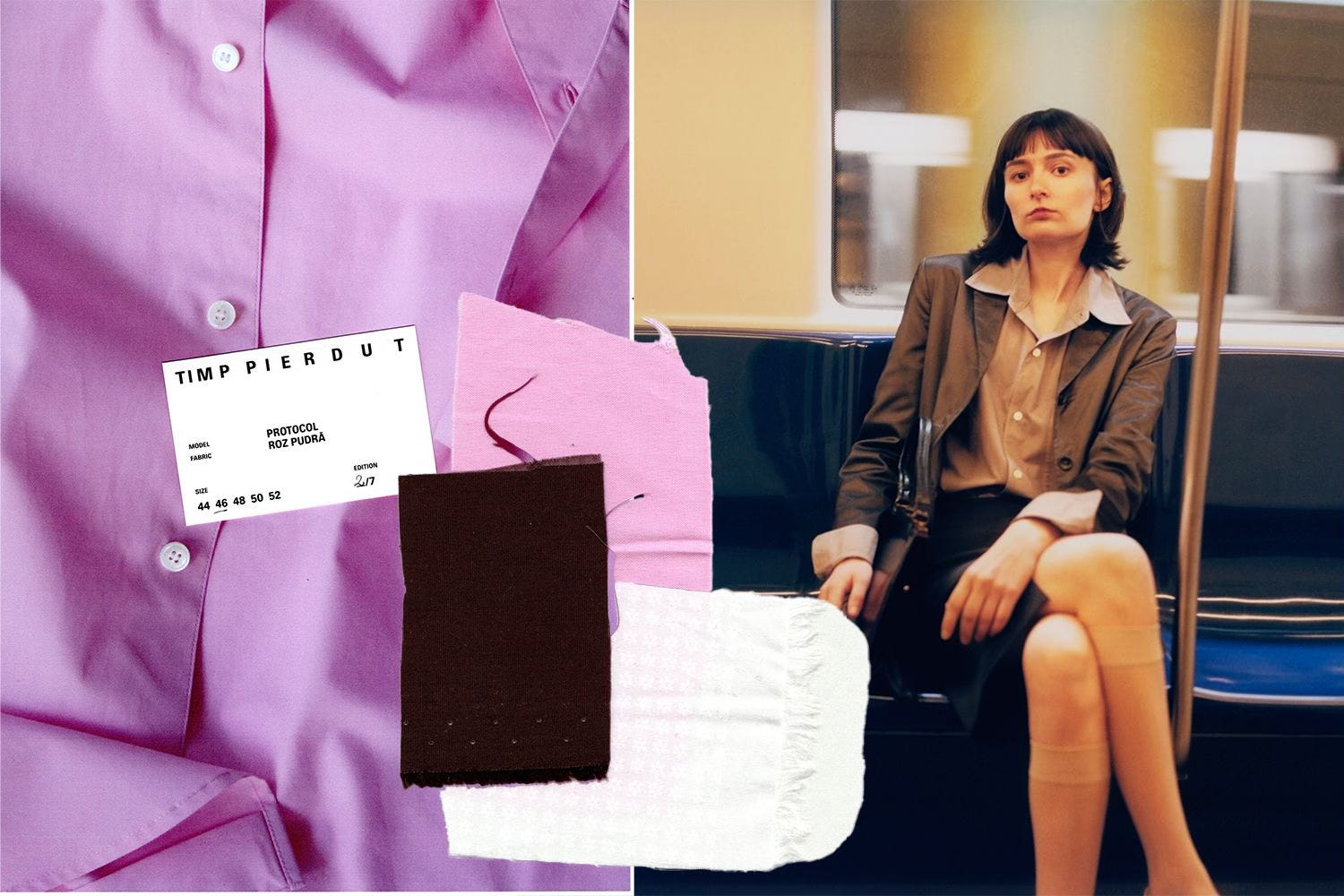
Inside Timp Pierdut’s World of Forgotten Fabrics
Shirts had never really appealed to me. I associated them with uniforms, with the constant worry of keeping collars very crisp and sleeves wrinkle-free. That changed when I found myself sitting at a long table in the apartment where Ariana Radu and Vlad Rahotă dream up future collections for their label, Timp Pierdut. Somewhere between swatches of fabric and cups of coffee, I began to see a simple piece of cloth differently.
Spread across the table was a well-worn notebook filled with notes and fabric samples. A coarse cotton on one page, a little bit of silk that almost slipped through my fingers on another, a weighty wool blend, too. Some made all of us disapprove of them – we didn’t like how they felt; and there were others we could already imagine becoming shirts we’d want to wear ourselves. Every swatch carried a history. It had passed through warehouses and factories, collections and forgotten shelves. Ariana and Vlad examine them with the same care an editor brings to an archive of photographs. They weren’t searching for perfection when they started their brand, but for that detail that could open up a new direction.
A single roll of fabric might yield no more than ten shirts. That’s all there is. That’s what the material allows. Rather than seeing this as a limitation, they treat it as the beginning of a conversation.
Timp Pierdut was born from a desire to work with what already exists. When they imagined the brand in 2025, they envisioned it simply as “a Bucharest-based brand.” Borrowing a concept from architecture, they describe their approach as critical regionalism: the place where you live shapes your resources, your collaborations, and ultimately the way you create.
I had come to their apartment to be a model for a photoshoot inspired by the Romanian film Meandre. We tried on skirts and shoes, swapped shirts, and rearranged outfits. I caught myself paying close attention to the way a shoulder seam fell, the coolness of the fabric against my skin, how the garment allowed my body to move. Maybe I had never disliked shirts after all. Maybe I had only disliked the way they were presented to me, as garments meant to discipline the body. Here, they seemed to do the opposite. They left room for self-expression, inviting whoever wore them to become so many different versions of themselves.
I’ve worn the shirt I was gifted after the shoot dozens of times. With denim skirts, tailored trousers, buttoned all the way up or left casually open. Every time I put it on, I think about how much I love it. But I also think about Ari and Vlad’s ability to recognize value where the fashion industry sees only excess. Fabrics that, in the logic of mass production, are too scarce to matter. But in their world, it’s precisely that scarcity that makes them worth preserving.
Oana Barbonie defines herself as a visual reporter. She studied journalism and visual anthropology. Her work as an artist involves collage, photography, video and drawing, all experiments through which she wants to create meaningful visual breaks.
EDITOR’S PICKS
Every month, I share with you the things that caught my eye during my trips around the city or around the world. I recently traveled with my girlfriends to Copenhagen, Denmark and we discovered some very nice spots around the city. Summer is the perfect time to visit this gorgeous town as the weather is perfect for strolling and the days are so long you still have light at 10pm. So here is the Copenhagen edition of the editor’s picks.
An exhibition I recommend putting on your list is Seven Deaths, by Marina Abramović. It was my first encounter with her work and I have been following her for years. Even though it’s not her best, it is worth visiting. Abramović plays the protagonist in 7 short films about death, all exploring how the female body is repeatedly used as a stage for violence. The films are accompanied by Maria Callas’ angelic voice and the whole experience takes place at Cisternerne, the underground water tanks of Copenhagen, a space that enhances the atmosphere surrounding death.
A place I discovered and recommend is the vinyl store Jazzcup. If you are a jazz lover, this is the place for you. They have a big selection of new and secondhand discs that start from as little as 6 euros a piece. During nighttime, this place transforms into a jazz bar.
If you’re looking to do some shopping in a nice Danish store, I recommend going to Skall Studio. It is my favorite shop in Copenhagen, however it is for women only. They have vaporous, elegant pieces made from sustainable and organic fabrics.
A delicious place to go have a nice dinner is Ammans 1921. Set in the heart of the city, you can’t go wrong with any dish you pick from their menu. It is cozy, romantic and has a great selection of good wines. For something less pretentious, try Paté Paté in the Meatpacking District.
A neighborhood you shouldn’t miss is Frederiksberg. Probably the greenest and cleanest area of the city, it is known for great shops, its central and large park and its wide boulevards. The area features grand, 19th-century apartment buildings and pristine villas, so it’s great for strolling and admiring.
I’ll take August off this year, so I’ll see you all for a new edition in September. Wear sunscreen and enjoy summer, wherever you are!